
Start with what you remember
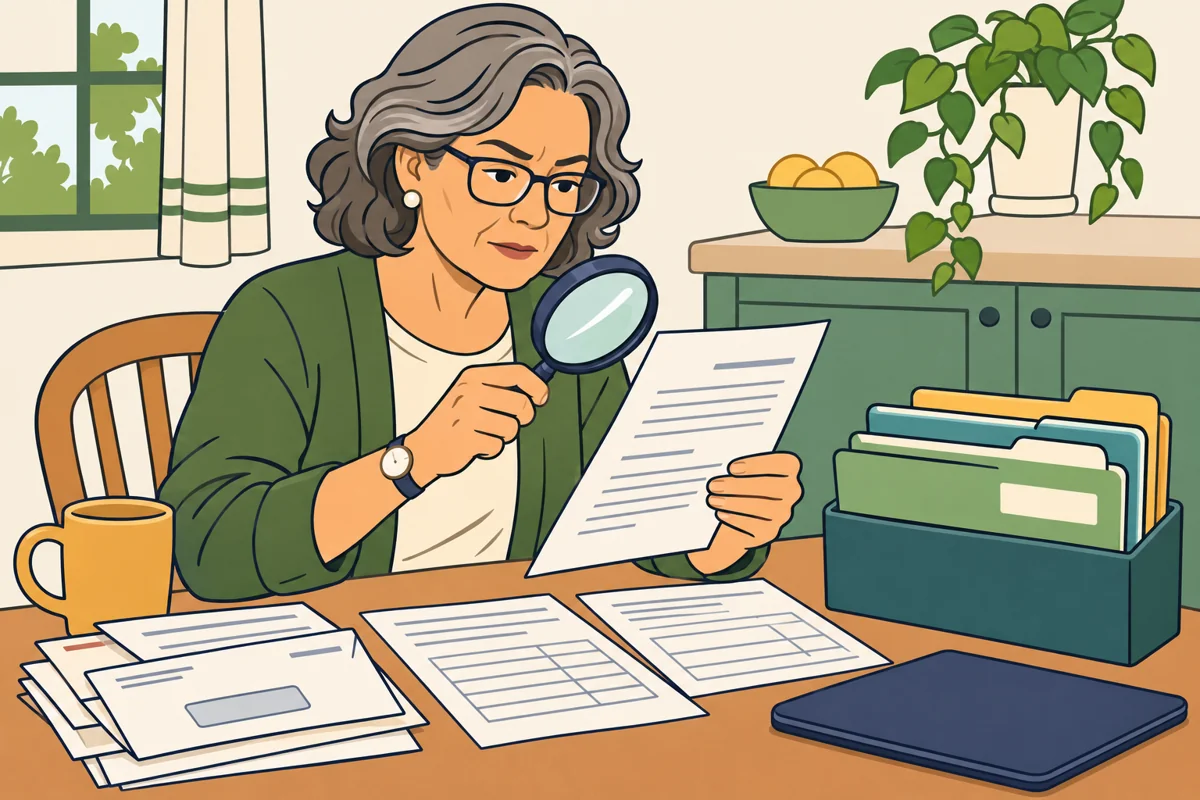
Before you call anyone, write down what you already know. The legal name of the employer matters more than the brand on your old badge, and the dates you worked there decide which plan document applied to you. If you can find a pay stub, an old statement, or a plan notice, note the recordkeeper or trustee name and any Employer Identification Number (EIN) printed on it.
| What you remember or found | Where to start | What to ask for |
|---|---|---|
| Employer name and your work dates | The employer’s benefits or human resources department | The plan administrator and recordkeeper, and whether you have a balance |
| An old statement or plan notice | The recordkeeper, trustee, or insurer named on the document | Current account status and a recent statement |
| An EIN or a plan number | The federal Form 5500 search | The sponsor, administrator, and service providers on the filing |
| A letter from an unfamiliar trust company | The sender, using a number you verify yourself | Whether it holds an automatic rollover IRA opened for you |
| Nothing but a company name | Form 5500 search, then the federal plan database | Whether a plan was filed for that employer and what became of it |
Keep one list for the whole search. Record the institution, the document date, who you spoke with, and the next action. That log is what turns a scattered search into a case you can pick up after a second call.
1. Ask the old employer’s benefits department
Start with the company you worked for and ask who administered the retirement plan during your employment dates. If the business was bought, renamed, or folded into a larger company, ask the successor’s benefits department instead; plans frequently move with the business.
Ask for four things: the plan administrator’s contact details, the recordkeeper or trustee that held the accounts, the plan number and EIN, and whether your account still shows a balance. If the employer says it has no record of you, ask whether the plan was ever transferred, merged into another plan, or terminated, and ask for the date.
Employers and plan administrators are required to give participants plan information on request, so a written request by email or letter creates a record of the ask. Keep the reply. If the company will not help, you can report a plan you can’t locate to the Employee Benefits Security Administration at 1-866-444-3272.
2. Search the plan’s public filings
Most private-sector plans file an annual Form 5500, and the Department of Labor publishes those filings in a searchable database. Search by plan sponsor name, employer name, EIN, or plan name. The filing identifies the plan sponsor and administrator and lists the service providers that handled the money, which is often the fastest route to the firm that still holds your balance.
The search has a few useful tricks: an asterisk widens a term (widget* finds widget-related filings), double quotes force an exact phrase, and a hyphen excludes a word. If the filings for an employer stop after a certain year, treat that as a lead rather than a dead end. It usually means the plan merged with another plan, was terminated, or the sponsor stopped filing.
Official reference
Form 5500 Search ·
How the search works
3. Use the federal plan database
The Department of Labor’s Retirement Savings Lost and Found database searches for private-sector retirement plans associated with your Social Security number. You must verify your identity through Login.gov first, which asks for your legal name, date of birth, Social Security number, a mobile device, and a photo of an active driver’s license.
Two limits matter. The database is an information tool: it does not decide eligibility for benefits, process claims, or pay anything. And it covers certain employer and union plans, not IRAs. If your old plan rolled your balance into an IRA, the IRA itself will not appear in this search. Take the plan the database does find back to its administrator and ask where the distribution went.
The department will never call, text, or email to ask for your password, one-time passcode, or identity-proofing details. Work only in the official site.
4. If the employer closed or sold
A closed employer does not usually mean the money is gone. Plan assets are held by a trustee or recordkeeper, separate from the company’s own funds. The question is who is now responsible for the plan.
| What happened to the employer | What to do next |
|---|---|
| The plan was terminated because the employer disappeared | Search the Abandoned Plan Search by plan or employer name to find the Qualified Termination Administrator handling the wind-down. |
| The company was acquired | Ask the successor’s benefits department whether the plan merged into a surviving plan, and ask for the effective date. |
| You are not sure the plan ever existed | Run a Form 5500 search on the employer’s legal name and EIN, then ask the employer’s former payroll or benefits contact. |
| The employer ran a pension as well as a 401(k) | A defined benefit pension may be insured by the Pension Benefit Guaranty Corporation; a 401(k) account is not, so keep searching the plan recordkeeper. |
The Abandoned Plan Search tells you whether a plan is in the process of being terminated or has already been terminated, and it names the Qualified Termination Administrator (QTA) responsible. Contact that administrator for your balance and for the distribution records.
5. Check whether the balance was cashed out
Plans are allowed to move small balances out when you leave. The maximum balance a plan may force out rose from $5,000 to $7,000 for distributions after 2023, and the plan’s own document may set a lower figure. If an eligible mandatory distribution is more than $1,000 and you made no election, the plan generally must send it to an individual retirement account the plan designates, rather than cutting you a check.
Ask the plan for the distribution date, the amount, the receiving institution, and a copy of any Form 1099-R. Then contact the receiving institution using a number you verified yourself. If the plan mailed you a check that went to an old address and was never cashed, ask what happened to the uncashed amount; issuers often turn those funds over to a state.
6. State unclaimed property as a backstop
When the trail goes cold, search the official unclaimed property program in every state where you lived, plus the state where the employer was located. Start with your current surname and then try maiden names, initials, and alternate spellings. USA.gov’s unclaimed money guide links to the state programs.
If a record appears to match, check the reporting institution and the address shown before you file. A prior employer’s plan, a recordkeeper, or a bank that escheated an uncashed check is a plausible match. Submit your claim only through the state’s official process, which is free.
What to ask for when you find the plan
I worked at [employer] from [year] to [year] and I’m trying to locate my 401(k) balance. Can you tell me the secure way to verify my identity? I’d like the plan administrator’s and recordkeeper’s names, whether I have a balance today, and the options available to me. If the balance was distributed, I’d like the date, the amount, and the institution it was sent to.
Once you can see the account, ask for a current statement and a written summary of fees and investment choices. Then decide what to do with it. You can usually leave it where it is, move it to a current employer’s plan, or roll it into an IRA. Each move has different costs and rules, so read how to move an IRA or 401(k) without a tax mistake before you sign anything.
Frequently asked questions
Can I find a 401(k) with only my Social Security number?
The federal Retirement Savings Lost and Found database matches plans to your Social Security number after you verify your identity through Login.gov. That identifies a plan, not a balance. You still have to contact the plan administrator or recordkeeper to confirm what you are owed, and the database does not cover IRAs.
Is an old 401(k) safe if the employer went out of business?
Plan money is held in trust by a trustee, insurer, or recordkeeper and is not the employer’s operating cash, so a company closing does not by itself erase your balance. The Pension Benefit Guaranty Corporation insures private defined benefit pensions, not 401(k) accounts, so for a 401(k) your search ends with the recordkeeper or the Qualified Termination Administrator.
Should I leave the money in the old plan?
Sometimes yes. Older plans can have institutional pricing and strong creditor protection, while others charge high recordkeeping fees to former employees. Compare the annual fees, the investment menu, the service you can actually reach, and whether the plan lets you take a loan or delay required distributions while you are still working there.
What if the plan says I never had an account?
Ask whether the employer used a different legal name for the plan, whether you were covered by a union or association plan, and whether the plan was merged or terminated during your employment. Then run a Form 5500 search on the legal name and the EIN. If the filings exist and name a recordkeeper, call that firm directly.
How long does a lost 401(k) search take?
Plans that are still open and well-documented can be resolved in a call or two. A terminated plan, a defunct employer, or an automatic rollover IRA usually takes longer because each institution confirms only its own records. Keep dates and names for every contact so a second call can pick up where the first one stopped.
Related guides
Keep going with the page that matches your next question.
Find an old IRA
Trace an IRA through old statements, Form 5498, employer records, or state unclaimed property.
Read the IRA guideMove the money
Compare a direct rollover, a trustee-to-trustee transfer, and a 60-day rollover before you move a balance.
Read the rollover guideFind an inherited IRA
Locate and handle an account you inherited when the custodian is unknown.
Read the inherited IRA guideFor general education. Individual tax and investment decisions depend on your circumstances.