
Start with the clue you have
| What you remember or found | Where to start | What to ask for |
|---|---|---|
| You opened an IRA yourself | Old statements, tax files, email, or a known bank or brokerage | The most recent statement and the current custodian |
| You left a job with retirement savings | Former employer or plan administrator | The date and destination of any rollover or payout |
| You found a Form 5498 | The institution listed as trustee or issuer | Whether the account is open, transferred, or closed |
| You found a Form 1099-R | The institution listed as payer | How the distribution was paid and where it went |
| A family member died | The estate’s records and any known IRA custodian | The firm’s beneficiary process and required documents |
| You found a gold dealer invoice | The invoice, IRA paperwork, and storage records | The name of the IRA custodian and the depository |
1. Search your email, tax files, and old statements
Start with the years you were most likely to open the account. Common clues include leaving a job, moving a retirement balance to a new firm, starting a business, or opening a Roth IRA around tax season. Write down the names and addresses you used at the time. An institution may have an old address on file even if you have since updated it elsewhere.
Try email searches for “IRA statement,” “rollover confirmation,” “Form 5498,” “1099-R,” “retirement account,” and “account opened.” Check paper tax folders, archived email addresses, and records your tax preparer sent you. A year-end brokerage statement or bank CD maturity notice may be enough to identify the institution. If you find an old message with a login link, go to the firm’s current official site to sign in or call its published number.
Save a record of each lead. A simple list with the institution, document date, account type, last four digits, and next action works. You can keep it on paper or in a private local file. Store copies of statements and tax forms securely. Keep full account numbers and personal identifiers out of ordinary email.
Read dates from oldest to newest. A 2018 statement tells you where the IRA was in 2018. A 2020 transfer confirmation can show where it went next. A zero-balance statement might be the end of that institution’s involvement and the beginning of your search at another firm. If the statement says “closed” or “transferred” without listing a destination, ask for the closing transaction details and any receiving institution on record.
2. Use Form 5498 and Form 1099-R to trace the money
On Form 5498, look for the name and address of the trustee or issuer. Box 5 shows the account’s reported fair market value for that reporting period, and Box 7 identifies the IRA type. Box 2 can show a rollover contribution. The balance on an old form is a historical clue. Ask the current custodian for a recent statement before using that figure in any financial decision.
On Form 1099-R, look at the payer name and the year. It can show who reported a distribution. A former employer’s plan may issue one for an eligible direct rollover even when you did not receive the money personally. If both forms exist for a rollover, the 1099-R may point to where the money came from while the 5498 may point to the IRA that received it. A direct transfer between IRA trustees may leave a different paperwork trail, so use institution records to confirm the destination.
If you can’t find the forms, open your IRS Individual Online Account and look for a wage and income transcript for the relevant year. The IRS says that transcript can include data from Forms 1099 and 5498. Form 4506-T is another way to request it. Identifying information may be masked, so match any partial institution name with old mail, bank transfers, or what your tax preparer can provide. The transcript helps you identify a lead. The financial institution can tell you the account’s status today.
Official references
IRS Form 5498 ·
IRS
transcript types · IRS instructions for
Forms 1099-R and 5498
3. If the money came from a job, start with the old plan
An IRA and a 401(k) have different records. For an account you opened at a bank or brokerage, contact that institution. For money set aside through payroll at a former job, ask the employer’s benefits department who administered the retirement plan for your employment dates. If the business changed names or was bought, check with the successor’s benefits department.
Ask whether your balance stayed in the plan, moved to a successor plan, went to an automatic rollover IRA, or was paid out. Some plans can make mandatory distributions of small balances. If an eligible mandatory distribution exceeds $1,000 and you did not make an election, the plan generally must send it to an IRA it designates. The federal maximum for the relevant mandatory distributions increased from $5,000 to $7,000 for distributions after 2023. The year and the particular plan’s rules matter.
For example, suppose you left a job with a small balance and remember seeing a letter from an unfamiliar trust company. The company may have been assigned as the rollover IRA custodian. Ask the plan for the exact legal name of the recipient, the distribution date and amount, and a copy of the transfer notice or any Form 1099-R. Then call the receiving institution using a number you independently verified.
If you can’t find the old plan administrator, try the Department of Labor’s Retirement Savings Lost and Found. It can help identify certain private-sector employer or union plans. The site excludes IRAs, including the automatic rollover IRA that may have received the money. Once you find the old plan, ask its administrator where it sent the distribution. If the employer disappeared, the department’s Abandoned Plan Search may identify who handled an eligible plan’s termination. If the money stayed in a workplace plan rather than an IRA, the companion guide covers how to find a lost 401(k) through the plan’s public filings and the federal database.
Official reference
IRS guidance on the
automatic rollover threshold
4. Track down a firm that changed names or closed
An old account statement can carry the name of an institution that has merged, sold part of its business, or closed. Search for the exact legal name on the statement as well as the familiar brand. With a brokerage, the fine print might name a separate clearing firm or custodian that can help route your request.
| If the old institution was a… | Try this |
|---|---|
| Bank or savings association | Use FDIC BankFind to check its history. If it failed, look for the acquiring bank and the FDIC’s failed-bank records. |
| Brokerage firm | Use FINRA BrokerCheck to verify the firm. Then look for official notices naming a successor or check the old statement for a clearing firm. |
| Employer plan | Ask the former employer or successor for the plan administrator’s contact details. Try the Department of Labor tools if the employer has closed. |
| Independent IRA custodian | Use the legal name on Form 5498 or the account agreement to find an official notice of a sale or change. Ask whether your specific account was included. |
Keep your original statement and write down the date and name of each person you speak with. If a firm says it transferred the business but can’t locate your account, ask for the department that handles legacy accounts, transfer records, or closed accounts.
Official reference
FDIC
guide to finding a lost bank account
5. Check state unclaimed property when the trail goes cold
If mail went to an old address for years or a firm says it turned funds over to a state, search the official state unclaimed property program. USA.gov’s unclaimed money guide links to state resources. Start with the states where you lived and try prior surnames, initials, and alternate spellings. For a deceased relative’s property, follow the state’s instructions for someone claiming on their behalf.
If you find a record that appears to match, verify the reporting institution and any address shown. Submit documents through the state’s official claims process. If the custodian already reported a distribution or remitted property to the state, collect the date, amount, and tax forms before deciding how to handle the claim. A tax professional can help if you’re unsure how a prior distribution or recovered amount affects your return.
An empty search leaves several possibilities. The account could still be with a custodian, have been transferred, or have been paid out earlier. Go back to the last institution you can document and ask what happened after the date of your record.
How to find an inherited IRA when the custodian is unknown
If you’re helping after someone dies, look for recent statements, Form 5498, correspondence from a bank or trust company, and records from the person’s tax preparer. If you know the custodian, ask for its beneficiary services team and how it accepts documents securely. The firm can explain what it needs to confirm who can receive account information or act on the IRA.
The IRS describes how an authorized executor, administrator, or personal representative can request a deceased person’s tax information and what proof is required. This can help when the tax paperwork you have is incomplete. Finding the account and establishing who’s entitled to it are separate steps. Ask the custodian to confirm the account title and beneficiary process before assuming you can move or withdraw the money.
Inherited IRA options can vary by beneficiary type and the owner’s circumstances. Before asking for a check or requesting a transfer, get the custodian’s instructions for the inherited account and ask about any distribution deadlines that apply. The companion guide covers how to find an inherited IRA when you don’t know where it’s held, including the documents, the proof of authority, and the payout deadlines.
Official references
IRS
guide to requesting a deceased person’s information · IRS
retirement beneficiary rules
How to find an old gold IRA
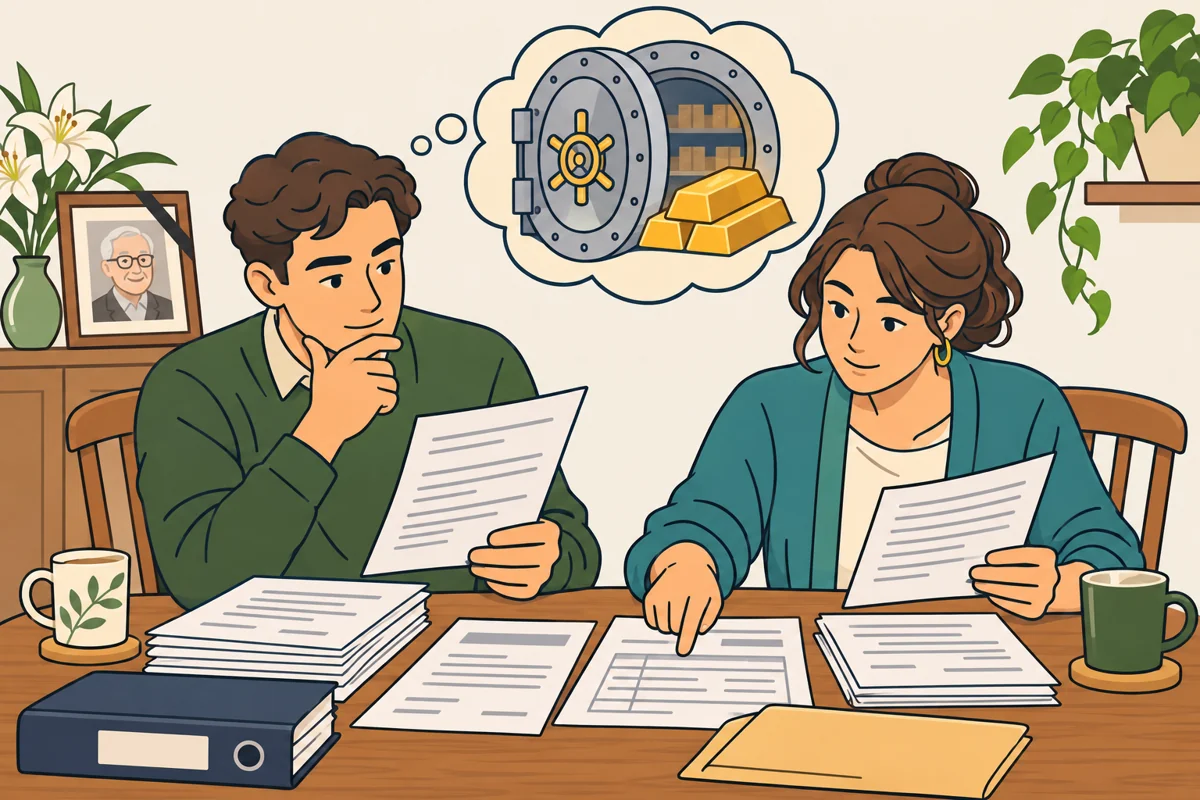
A precious metals IRA can involve three businesses. The dealer sold the metal, the custodian administers the IRA, and the depository stores the holdings. A gold dealer invoice may be the first clue you find. Look for a separate trustee or custodian name in the payment instructions, an account statement, Form 5498, or the paperwork that authorized the purchase.
If you only know the dealer or depository, use its independently verified contact details and ask which custodian appears on the transaction or storage records. Then contact the custodian for a recent statement and information about the current storage location. If this is a deceased relative’s account, ask which proof of authority or beneficiary documents it needs before providing details. An invoice records a purchase. The custodian can explain what its records show today and how to request more information about the holdings.
If the IRA holds physical metals, ask for the description and quantity of each holding, the name of the current depository, and any storage or administration fees. Those details help you reconcile a custodian statement with an old invoice or storage receipt.
Official references
Investor.gov
alert on self-directed IRAs · New
Direction Trust precious metals beneficiary guide
What to say when you call
I’m trying to locate an IRA that may have been held at your institution. I have a statement or tax document from [year]. Can your team tell me the secure way to verify my identity? I’d like to know whether the account is still open. If it transferred or closed, I’d like the date, how the funds were sent, and the receiving institution if you have it. Can I request a copy of the most recent statement or the closing transaction?
For a former employer, swap the first line for “I worked at [company] from [year] to [year], and I’m trying to find where my retirement plan balance went.” Ask for a case number or a way to follow up if the search takes more than one call.

What to do when you find the account
Ask for a current statement, confirm whether the account is traditional, Roth, or inherited, and update your contact information through the firm’s secure process. Review the fees, holdings, and beneficiary designation. If the account is closed, keep the closing record and confirm the money arrived at the institution named as the recipient.
Finding an account doesn’t require withdrawing it. If you decide to move an IRA, ask the receiving custodian about a direct trustee-to-trustee transfer. A distribution paid to you has different rules and may create a deadline or tax consequences. Have a qualified tax professional review the details if the account is inherited, a check has already been issued, or you are considering a Roth conversion. See how to move an IRA or 401(k) without a tax mistake for the rules that apply to each kind of transfer.
Official reference
IRS
guide to rollovers and transfers
Related guides
Keep going with the page that matches your next question.
Find a lost 401(k)
Track a former employer’s plan through its filings, the federal database, and a closed company’s records.
Read the 401(k) guideMove the money
Compare a direct rollover, a trustee-to-trustee transfer, and a 60-day rollover before you move a balance.
Read the rollover guideFind an inherited IRA
Locate and handle an account you inherited when the custodian is unknown.
Read the inherited IRA guideComparing gold IRAs after you find your account
Once you know where your savings are held, you can review your options at your own pace. If you are already considering physical precious metals, get a written quote for the exact coins or bars. Ask for the purchase price and same-day buyback bid on the same items. Compare that spread along with setup, custody, storage, and exit charges. Confirm who administers the IRA and where the metals will be held. The CFTC and FINRA precious metals checklist explains questions to ask before buying.
Physical metals can lose value, and transaction and storage costs affect what you keep. For questions about what to do with a recovered account, speak with a financial or tax professional who can evaluate your circumstances.
Frequently asked questions
Can I find an old IRA with my Social Security number?
A custodian may use your Social Security number as part of its secure verification process. Start by identifying the likely institution through statements, tax forms, or your former plan. The federal Retirement Savings Lost and Found can look up certain employer plans after identity verification, but it excludes IRAs.
Can I find a lost IRA if I never made a contribution?
Possibly. An IRA can receive money from an employer plan rollover. Check the employer’s distribution records and the IRS wage and income transcript for the likely transfer year. If the old plan gives you a recipient, ask that custodian whether it received the balance and what happened to it afterward.
How do I know if the balance was cashed out?
Ask the last known custodian or plan administrator for the closing transaction, payment date, and any 1099-R. If there was a check, ask whether it was sent to you or another institution, whether it cleared, and what happened if it went uncashed.
Can I leave the account where it is?
Ask the current custodian whether you can maintain the account and what fees or requirements apply. Update your address and confirm that you can access statements. If you want to consolidate accounts, first confirm the account types and ask about the proper transfer process.
What if the institution asks me to prove my identity?
Use the institution’s published phone number or secure portal and follow the verification steps it provides. If someone contacts you unexpectedly and offers to recover the IRA, independently find the institution’s contact details before sharing documents or paying a fee.